
AI Challenge Tackles Urban Traffic: Students Compete in ‘Urban Mobility Vision Hackathon’
Bengaluru: To address the growing traffic challenges in Indian cities using technology, the Urban Mobility Vision Hackathon was organized. This competition was jointly initiated by the Indian Institute of Science, Airavat Research Foundation, and the Bengaluru Traffic Police. The initiative is part of the Ministry of Education’s Artificial Intelligence Excellence Centre for Sustainable Cities program. The main objective was to develop advanced computer vision-based AI models tailored to real-world traffic conditions, aimed at improving future urban traffic management.
The hackathon was designed as a collaborative, team-based event, attracting student teams from colleges across India. Each team comprised up to four participants. Competitors were tasked with identifying and classifying various types of vehicles from images captured by traffic cameras in Bengaluru. The competition was conducted in multiple stages, with teams progressing from peripheral city areas toward the symbolic central hub at the Indian Institute of Science campus. Teams earned points based on the accuracy of vehicle identification under complex road conditions. The first stage ran from 11 May 2025 to 15 June 2025, with a live leaderboard tracking performance.
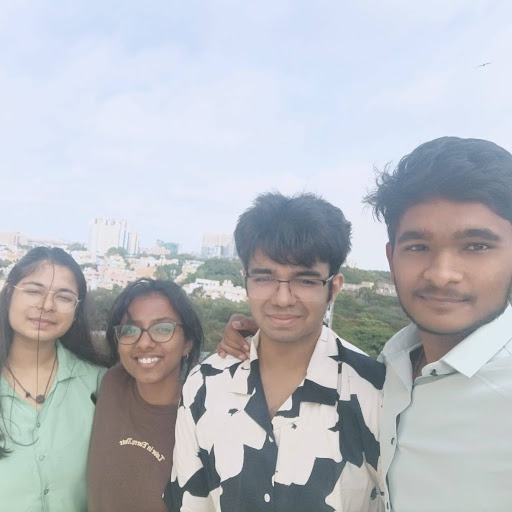
One of the participating teams, “404 Found,” included members Gadi Srihari Reddy, Arshi, Prithvi Raghu, and Jennifer Anand. The team performed well in the first stage, ranking among the top 20 and qualifying for the second stage.
In the second stage, teams were invited to the Indian Institute of Science for an in-person competition. Participants developed computer vision models for vehicle recognition using annotated traffic images. 404 Found created a model for vehicle classification based on India’s largest collectively assembled traffic image dataset. They applied advanced data formatting techniques and modern recognition algorithms, challenging the standard models developed by the institute. Although the team did not win in the final stage, reaching the second stage of a national-level competition was a significant achievement in itself.
The primary goal of the initiative is to demonstrate that India does not lack data but requires proper organization and usage. Efforts like these are generating large, structured traffic dataset/s that can help design solutions for crowd management, improved traffic signaling, optimized bus routes, and enhanced road safety. Experts believe that AI-driven models such as these could simplify daily commutes for millions of travelers and reduce environmental impact in the long run.